Pregnancy
Eat Healthy While Breastfeeding: Quick Tips
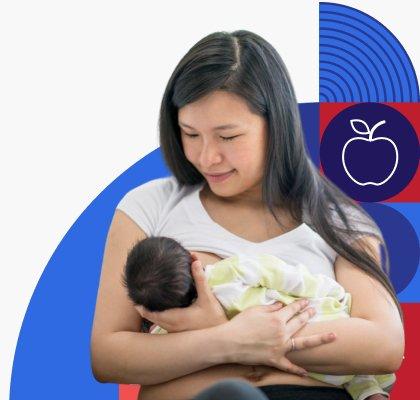
Breastfeeding has many benefits for moms and babies. For example, breastfeeding can:
- Help protect your baby from infections and illnesses, like ear infections and asthma
- Lower your risk of some diseases, like type 2 diabetes, ovarian cancer, and breast cancer
Making healthy food choices while you're breastfeeding will help you and your baby get the nutrients you both need.
Try to get most of the nutrients you need by following a healthy eating routine. Ask your doctor if you need to take a daily supplement (like a multivitamin) to get enough of certain nutrients.
Follow a healthy eating routine.
To get the nutrients you need while breastfeeding, follow a healthy eating routine. Choose a mix of healthy foods you enjoy from each food group, including:
- Proteins — like eggs, poultry, seafood, and meats from animal sources, and plant-based sources like beans, peas, lentils, legumes, nuts, seeds, and soy
- Dairy — like milk, yogurt, cheese, and, depending on your dietary needs, lactose-free or lactose-reduced products and fortified dairy alternatives, such as soy, almond, or oat milk yogurt. Fortified means the food has vitamins and minerals added
- Vegetables — like broccoli, carrots, spinach, peppers, sweet potatoes, beets, okra, and jicama
- Fruits — like berries, apples, oranges, bananas, grapes, and mangos
- Healthy fats and oils — found in many whole foods like salmon, sardines, nuts, seeds, avocados, eggs, dairy, meat, poultry, and olive oil
- Whole grains — like brown rice, whole-wheat bread, oatmeal, and whole-grain pasta
Try to choose foods and drinks with less added sugars, saturated fats, and sodium (salt). Learn more about eating healthy.
Get the right amount of calories for you.
You need more calories while you’re breastfeeding than you did before you were pregnant. Women who are breastfeeding should have 330 to 400 more calories per day than they were consuming before pregnancy. Work with your doctor to find a healthy eating routine that works for you and allows you to meet your personal weight goals.
Learn more about the calories and nutrients you need while breastfeeding.
Eat 8 to 12 ounces of seafood each week.
Many types of seafood are safe to eat while breastfeeding — and seafood is good for your baby’s brain development. It also has healthy fats that are good for you and your baby. Just be sure to choose fish and shellfish that are low in mercury.
Learn how to choose fish that’s healthy and safe to eat.
Drink plenty of fluids.
When you’re breastfeeding, your body needs extra fluids to stay hydrated. Try drinking a glass of water or another healthy, unsweetened beverage every time you breastfeed. And try to limit drinks with added sugars — like soda and sports drinks.
It’s usually safe to have up to 300 milligrams of caffeine a day (the amount in about 3 cups of coffee) — but your doctor may recommend less. Remember that tea and energy drinks often have caffeine in them as well. Caffeine could make your baby more fussy or irritable.
Consider avoiding alcohol.
Not drinking alcohol is the safest option for breastfeeding mothers. If you’re thinking about drinking while breastfeeding, talk with your doctor first.
If you choose to drink alcohol, follow these tips:
- Limit your alcoholic beverages. Keep in mind that many drinks have much more alcohol than a standard serving. Learn about what counts as a standard drink.
- If you’re going to have a drink, do it just after breastfeeding or pumping — not before.
- The more alcohol you drink, the longer it stays in your breast milk. For example, alcohol from 1 drink can be detected in breast milk for about 2 to 3 hours. Alcohol from 2 drinks can be detected for about 4 to 5 hours. Alcohol from 3 drinks can be detected for about 6 to 8 hours. Learn more about alcohol and breastfeeding.
Reviewer Information
This information on healthy eating while breastfeeding was adapted from materials from the Dietary Guidelines for Americans, the Centers for Disease Control and Prevention, and the Office on Women’s Health.
Reviewed by:
Dennis Anderson-Villaluz, MBA, RD, LDN, FAND
Lieutenant Commander, U.S. Public Health Service
Nutrition Advisor, Division of Prevention Science
Office of Disease Prevention and Health Promotion
Kara Beckman, PhD
ORISE Nutrition Policy Fellow
Office of Disease Prevention and Health Promotion
Dana DeSilva
ORISE Health Policy Fellow
Office of Disease Prevention and Health Promotion
For more information on eating healthy while breastfeeding, visit:
You may also be interested in:

Content last updated on July 7, 2026
